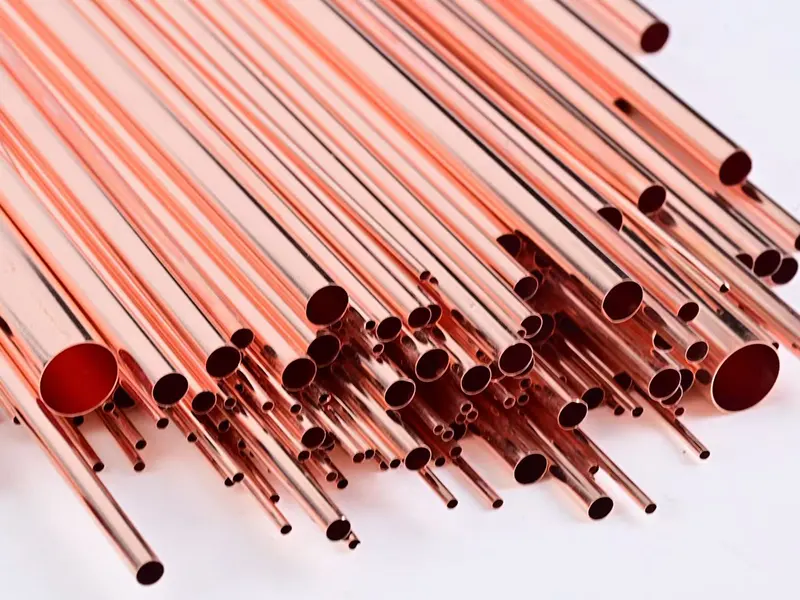

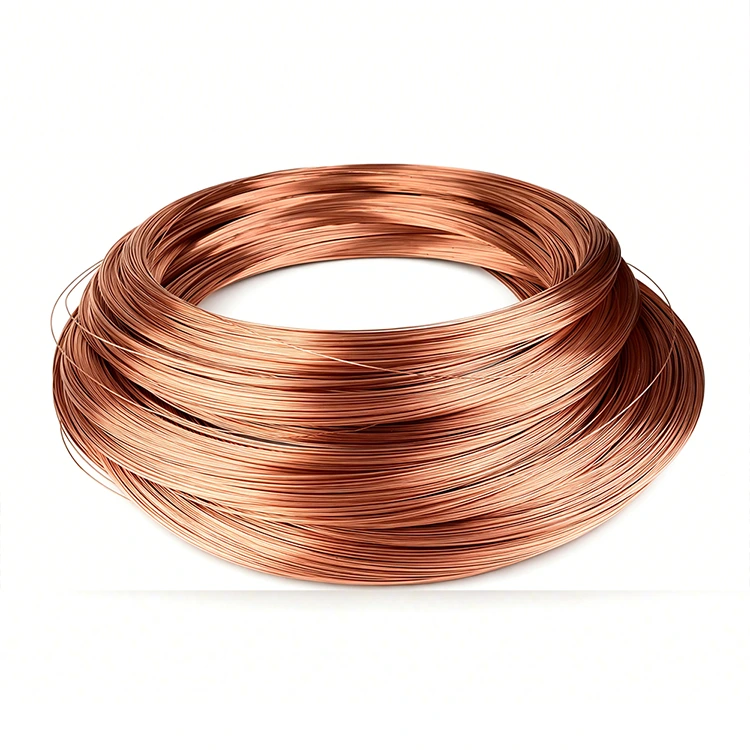
Precision red copper coil tube is widely used where reliable heat transfer, controlled fluid flow, flexibility, corrosion resistance, and dimensional consistency are important. Its continuous coiled configuration can reduce joints and simplify installation compared with multiple straight tube sections. For HVAC, refrigeration, heat exchangers, plumbing, solar thermal systems, and industrial equipment, the quality of the tube directly influences system reliability. This guide explains the material characteristics, manufacturing considerations, dimensional requirements, applications, customization options, quality checks, and purchasing considerations that engineers and buyers should evaluate when sourcing precision red copper coil tube.
- What Is Precision Red Copper Coil Tube?
- How the Coil Structure Supports Installation
- Material Characteristics That Matter
- Manufacturing and Precision Control
- Key Specifications to Check
- Major Industrial Applications
- Performance Advantages
- How to Specify the Right Tube
- Quality and Inspection Considerations
- Why Manufacturing Capability Matters
- Frequently Asked Questions
- Conclusion
What Is Precision Red Copper Coil Tube?
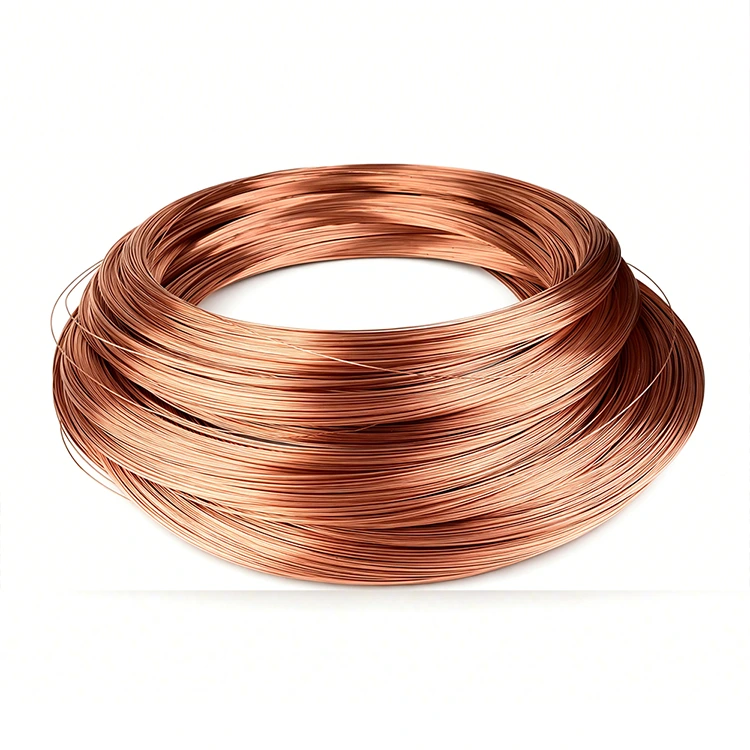
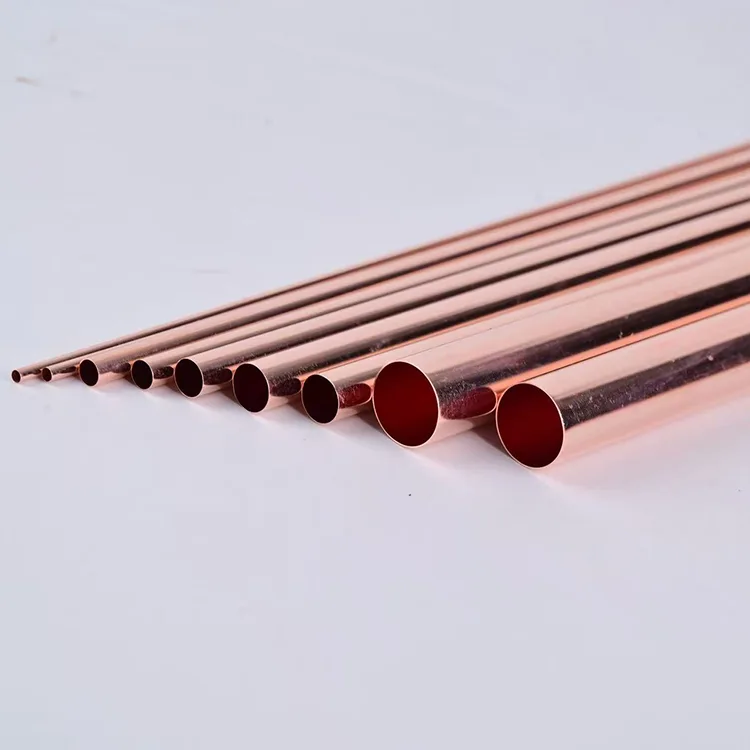
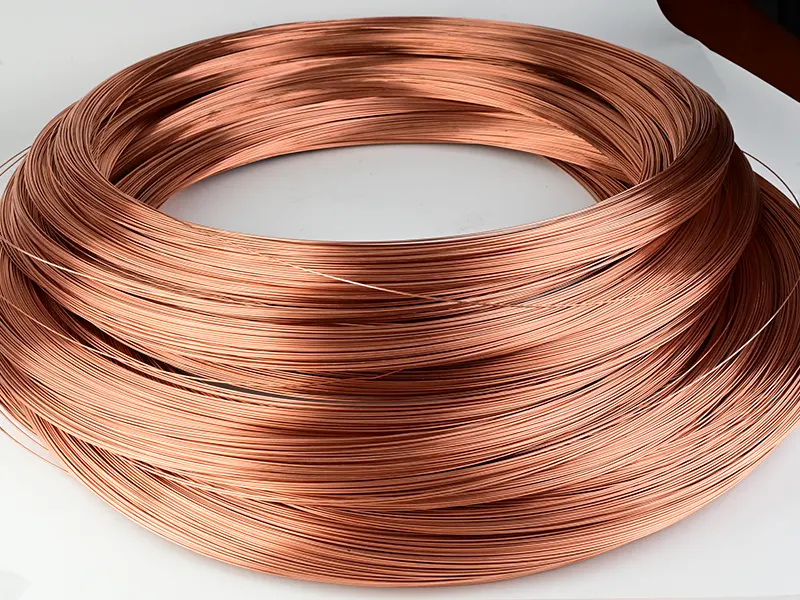
Precision red copper coil tube is a continuous length of copper tubing formed into a controlled coil configuration. The term “red copper” generally refers to high-purity copper, while “precision” emphasizes dimensional consistency, surface quality, wall thickness control, and dependable manufacturing tolerances.
Unlike short straight tube sections that require repeated connections, a coil can provide a substantially longer continuous length. This configuration is particularly useful when a project requires flexible routing, compact storage, or fewer connection points.
Copper is naturally well suited to thermal-transfer applications because of its high thermal conductivity. It also offers good ductility, allowing properly manufactured tubing to be formed and bent without unnecessary cracking during installation.
How the Coil Structure Supports Installation
The continuous coil format is one of the most practical characteristics of this type of tubing. In applications requiring long routing distances, installers can work with extended tube lengths instead of assembling many short sections.
- Fewer connection points: Long continuous lengths can reduce the number of joints required in suitable installations.
- Flexible routing: Annealed copper tubing can accommodate curved routing where the application permits.
- Efficient transportation: Coiled products can occupy less linear packaging space than equivalent straight lengths.
- Faster installation: Reduced cutting and joining requirements can simplify field work.
- Lower potential leakage exposure: Fewer joints can mean fewer potential connection points that require inspection.
These advantages are especially relevant in refrigeration, air-conditioning, heat-transfer, water circulation, and other systems where installation flexibility matters.
Material Characteristics That Matter
Material selection should match the operating environment rather than rely solely on a generic “copper tube” description. Different copper grades and manufacturing conditions can provide different combinations of conductivity, formability, strength, and application suitability.
| Characteristic | Why It Matters | Typical Engineering Concern |
|---|---|---|
| Thermal conductivity | Supports efficient heat transfer | Heat exchanger and HVAC performance |
| Ductility | Allows controlled forming and bending | Installation and routing |
| Corrosion resistance | Supports long-term service in suitable environments | Humidity, water, refrigerant and industrial conditions |
| Dimensional consistency | Helps maintain predictable connections and flow characteristics | Assembly accuracy and system stability |
| Surface cleanliness | Reduces contamination risks in sensitive applications | Refrigeration, instrumentation and specialized systems |
For demanding projects, buyers should request the exact material designation, applicable product standard, mechanical requirements, dimensional tolerances, and inspection documentation rather than relying on the material name alone.
Manufacturing and Precision Control
Consistent coil tubing depends on controlled manufacturing from raw material preparation through forming, drawing, annealing, cutting, cleaning, inspection, and packaging. Each stage can influence the final dimensional and surface condition of the tube.
Precision drawing is particularly important when a project requires controlled outside diameter, inside diameter, wall thickness, or tight dimensional tolerances. Annealing can then be used when greater flexibility and formability are required.
For precision metal components, production consistency is just as important as the specification itself. A tube that meets a nominal dimension but varies significantly from batch to batch can create problems during assembly and downstream processing.
Key Specifications to Check
A clear purchasing specification prevents misunderstandings between the buyer and manufacturer. Before requesting a quotation, engineering teams should define the following parameters.
| Specification | What to Define | Why It Is Important |
|---|---|---|
| Material | Copper grade and purity requirements | Determines material properties and application compatibility |
| Outside diameter | Required OD and tolerance | Controls connection and installation compatibility |
| Wall thickness | Nominal thickness and tolerance | Influences pressure capability, weight, and forming |
| Coil length | Length per coil or total quantity | Affects installation efficiency and logistics |
| Temper | Annealed or other required condition | Determines flexibility and forming behavior |
| Surface condition | Cleanliness, finish and protection | Important for sensitive or high-purity applications |
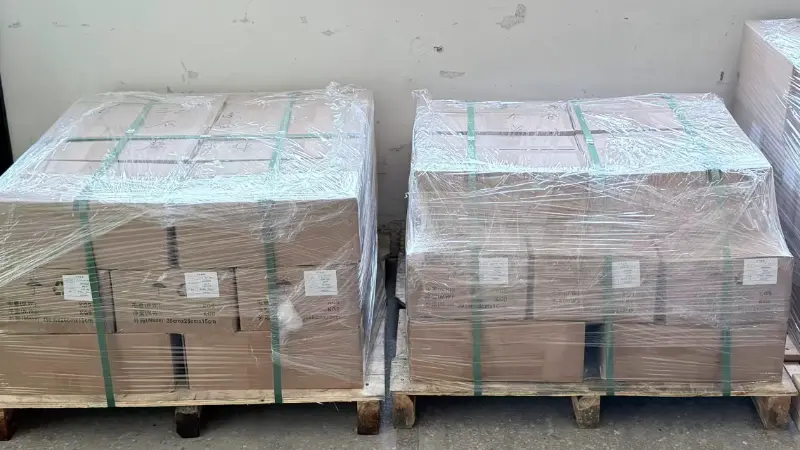
| Packaging | Coil protection, caps, wrapping and labeling | Protects products during storage and transportation |
| Standard | Applicable ASTM, EN, JIS or project specification | Creates an objective quality reference |
Depending on the intended application, copper tubing may be specified according to standards such as ASTM B280 or other applicable international specifications. The correct standard should always be selected according to the actual system design and destination-market requirements.
Major Industrial Applications
Precision red copper coil tube is suitable for a broad range of thermal and fluid-handling applications. The exact tube specification should be matched to the working pressure, temperature, fluid, cleanliness requirement, and installation method.
- HVAC and refrigeration: Copper tubing is widely used for refrigerant circuits, air-conditioning systems, refrigeration equipment, and thermal management assemblies.
- Heat exchangers: Copper's thermal conductivity makes it suitable for applications where efficient heat transfer is required.
- Plumbing and water systems: Appropriate copper tubing can be used for water circulation and fluid distribution where the material is compatible with the application.
- Solar thermal systems: Coiled copper tube can be integrated into thermal circulation and heat-transfer systems.
- Industrial equipment: Customized copper tubing can be incorporated into machinery, thermal-control systems, and specialized equipment.
- Instrumentation: Smaller precision tubing can be used where controlled dimensions and fluid routing are important.
The supplier's ability to customize dimensions, lengths, temper, forming, cleaning, and packaging can become especially valuable when standard commercial tubing does not match the equipment design.
Performance Advantages
1. Efficient Heat Transfer
Copper's high thermal conductivity makes it a strong candidate for systems in which heat must move efficiently through the tube wall. This characteristic is useful in evaporators, condensers, heat exchangers, thermal circulation systems, and other heat-transfer equipment.
2. Good Formability
Properly selected annealed copper coil tube can be easier to route and form than rigid straight tubing. This can be useful where equipment layouts contain bends, compact spaces, or irregular routing requirements.
3. Continuous Lengths
A coil configuration allows manufacturers to supply long continuous tubing. This can simplify installation planning and reduce the number of intermediate connections in suitable designs.
4. Compact Storage
Coiled tubing can be packaged efficiently, making it practical for transportation and warehouse handling. Packaging should nevertheless protect the tube from deformation, moisture, contamination, and mechanical damage.
5. Custom Manufacturing
Precision tube manufacturers can produce customized dimensions and processing configurations for equipment manufacturers, distributors, contractors, and OEM projects.
How to Specify the Right Tube
Selecting a coil tube should begin with the operating conditions rather than the product name. A practical specification process can follow these steps:
- Identify the application. Define whether the tube will be used for refrigeration, heat transfer, water circulation, instrumentation, or another purpose.
- Determine operating conditions. Record temperature, pressure, fluid or gas type, and environmental exposure.
- Define dimensions. Specify outside diameter, inside diameter or wall thickness, length, and dimensional tolerances.
- Select the temper. Decide whether flexibility or higher mechanical strength is more important for the installation.
- Confirm applicable standards. State the required ASTM, EN, JIS, customer, or project standard.
- Specify surface requirements. For sensitive applications, define cleaning, plugging, capping, or other protection requirements.
- Confirm packaging. Define coil size, weight, labeling, protection, and export packaging.
- Request inspection documentation. Ask for material certificates, dimensional reports, pressure tests, or other documentation relevant to the application.
Quality and Inspection Considerations
Quality control should cover both the copper material and the finished coil. A comprehensive inspection plan may include material verification, dimensional inspection, surface inspection, leak or pressure testing where applicable, cleanliness verification, and packaging checks.
Wenzhou Zenko Metal Co., Ltd. states that its production system is certified to ISO 9001 and that it supports manufacturing according to standards including ASTM B152 and ASTM B280. The company also describes capabilities covering precision drawing, cutting, chamfering, forming, vacuum annealing, ultrasonic cleaning, inspection, and export packaging. :contentReference[oaicite:1]{index=1}
These capabilities are relevant when a buyer needs more than a commodity copper tube and instead requires repeatable dimensions, controlled processing, customized configurations, and documented quality.
For international procurement, buyers should also consider batch traceability and the availability of inspection records. Zenko states that inspection documentation and third-party inspection support are available for its products. :contentReference[oaicite:2]{index=2}
Why Manufacturing Capability Matters
Choosing a precision copper coil tube supplier is ultimately a manufacturing decision as much as a material decision. A supplier with integrated processing capabilities can reduce the need to coordinate multiple subcontractors for drawing, forming, annealing, cleaning, cutting, and inspection.
Wenzhou Zenko Metal Co., Ltd. was established in 2017 and focuses on precision metal tubing and precision machining. Its stated production capabilities include copper capillary tubes, red copper coil tubes, customized components, vacuum-annealed precision parts, and ultrasonic-cleaned assemblies. The company reports an approximately 8,000-square-meter factory area and around 150 pieces of production equipment. :contentReference[oaicite:3]{index=3}
Zenko also provides OEM and ODM services, including customized dimensions, drawings, samples, and private packaging. Its published information indicates that standard stocked products can generally be shipped within several days, while customized orders may require a longer production schedule depending on complexity and quantity. :contentReference[oaicite:4]{index=4}
For buyers developing HVAC components, refrigeration equipment, heat-transfer assemblies, plumbing products, or industrial systems, this type of integrated manufacturing support can make the sourcing process more straightforward.
Frequently Asked Questions
It is commonly used in HVAC, refrigeration, heat exchangers, plumbing, solar thermal systems, industrial equipment, and other applications requiring reliable copper tubing and flexible routing.
Coil tube provides continuous lengths and greater routing flexibility. In suitable applications, this can reduce the number of joints, simplify installation, and make transportation and storage more efficient.
Yes. Depending on the manufacturer, customization can include diameter, wall thickness, coil length, temper, surface treatment, cutting, forming, cleaning, packaging, and other project-specific requirements.
Provide material grade, tube diameter, wall thickness, coil length, temper, quantity, application, operating pressure and temperature, applicable standards, surface requirements, packaging requirements, and drawings if available.
Copper is widely used in HVAC and refrigeration because of its thermal conductivity, ductility, and established use in tubing systems. However, material selection should always consider the refrigerant, pressure, temperature, joining method, and applicable system requirements.
Depending on the project, useful documents may include material certificates, dimensional inspection reports, test reports, certificates of conformity, batch traceability records, and applicable certification documents.
Yes. OEM projects can be developed around customer drawings, specified dimensions, required coil lengths, processing requirements, inspection criteria, and packaging instructions.
Proper packaging should prevent deformation, moisture exposure, contamination, scratches, and end damage. The exact packaging method should be selected according to tube size, coil weight, transportation conditions, and storage duration.
Conclusion
Precision red copper coil tube combines the inherent advantages of copper with the practical benefits of continuous coiled tubing. For engineers and purchasing teams, the most important considerations are not simply price and nominal dimensions. Material grade, dimensional accuracy, wall thickness, temper, surface condition, manufacturing consistency, applicable standards, inspection documentation, and packaging all contribute to the reliability of the final product.
The right specification can help reduce installation difficulties, improve dimensional compatibility, support efficient heat transfer, and create a more predictable supply chain. For customized industrial applications, working directly with a manufacturer capable of precision drawing, forming, annealing, cleaning, inspection, and OEM/ODM production can further simplify procurement.
Need Precision Red Copper Coil Tube for Your Project?
Wenzhou Zenko Metal Co., Ltd. provides precision copper tubing and customized metal components for global industrial applications. Whether you need a standard copper coil tube, customized dimensions, specific coil lengths, precision processing, OEM production, or project-based packaging, a detailed specification can help the technical team develop a suitable solution.
Share your required material, tube dimensions, wall thickness, coil length, quantity, application, applicable standard, and any available drawings. Contact us to discuss your requirements and request a professional quotation for your precision red copper coil tube project.